Magnetic Chair Machine: The 2026 Buyer’s Guide for Clinics & Distributors
September 21, 2026Laser Cosmetic Devices for Acne Removal: Mechanisms, Procedures and Clinical Practice
June 08, 2026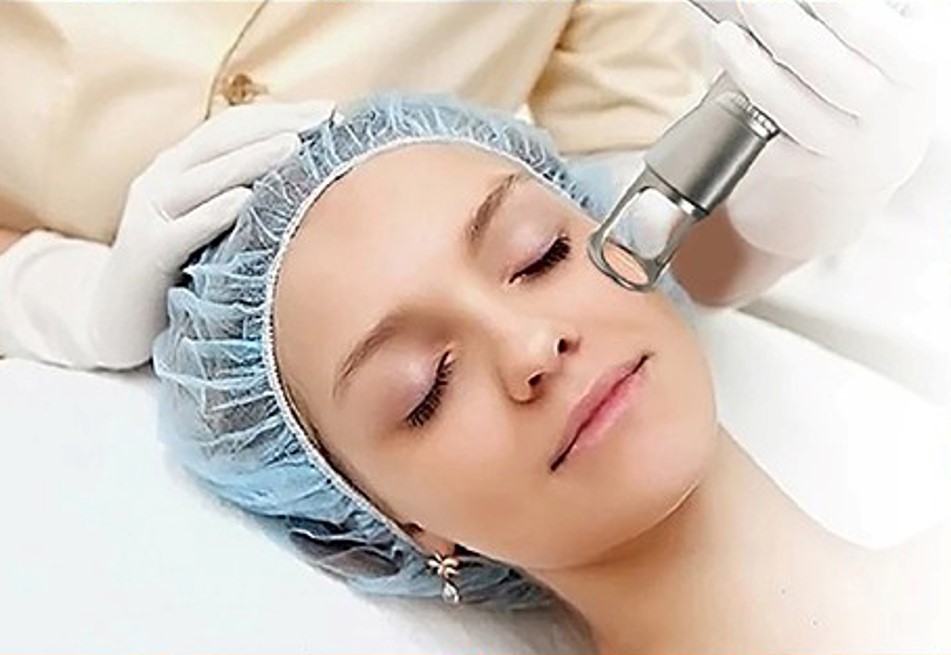
Laser Cosmetic Devices for Acne Removal: Mechanisms, Procedures and Clinical Practice
Introduction
Acne vulgaris, commonly referred to as acne, is a chronic inflammatory skin disease involving pilosebaceous units, mainly triggered by excessive sebum secretion, hyperkeratosis of follicular openings, proliferation of Cutibacterium acnes and inflammatory reactions. Traditional treatments including topical retinoids, oral antibiotics and hormonal medicines often bring side effects such as dry skin, drug resistance and gastrointestinal discomfort. In recent decades, laser cosmetic technology has evolved into a reliable non-invasive or minimally invasive alternative for acne management, targeting pathogenic tissues precisely while avoiding systemic adverse reactions. This paper systematically elaborates on the working principles of laser devices, mainstream laser classifications, standard treatment procedures, post-operative nursing and potential risks, providing professional references for clinical acne laser treatment.
Fundamental Working Mechanism of Laser Acne Removal
Laser therapy relies on selective photothermolysis theory: specific-wavelength laser energy is absorbed by targeted chromophores inside skin tissue, converting light energy into thermal energy to destroy lesion structures without damaging surrounding normal skin cells. For acne treatment, lasers exert therapeutic effects through three core pathways.
First, bactericidal effect: Cutibacterium acnes generates porphyrins during metabolism; these substances absorb visible laser light to produce singlet oxygen radicals, which rupture bacterial cell walls and inhibit bacterial reproduction to relieve inflammatory pimples and pustules.
Second, sebum regulation: mid-infrared lasers penetrate deep into the dermis to heat sebaceous glands, shrinking gland volume and cutting down sebum output, fundamentally reducing pore clogging chances.
Third, anti-inflammation and tissue repair: laser thermal stimulation lowers the release of inflammatory cytokines like TNF-α and IL-1, alleviating redness and swelling of lesions; meanwhile, it activates fibroblast activity to promote collagen synthesis, accelerating wound healing and preventing acne scar formation.
Mainstream Laser Devices for Acne Treatment
Clinically, lasers are categorized into visible light lasers and infrared lasers according to wavelength, each suited for different acne severities and skin conditions.
Pulsed Dye Laser (PDL, 585–595 nm) belongs to yellow visible light laser, primarily absorbed by hemoglobin and porphyrins. It is the first choice for mild to moderate inflammatory acne with obvious erythema, effectively fading red pimples and reducing facial flushing, with slight pain and short recovery time. KTP 532 nm green laser has stronger penetrating power than blue light, killing bacteria and mildly suppressing sebum secretion, widely applied to facial acne and small-area body acne.
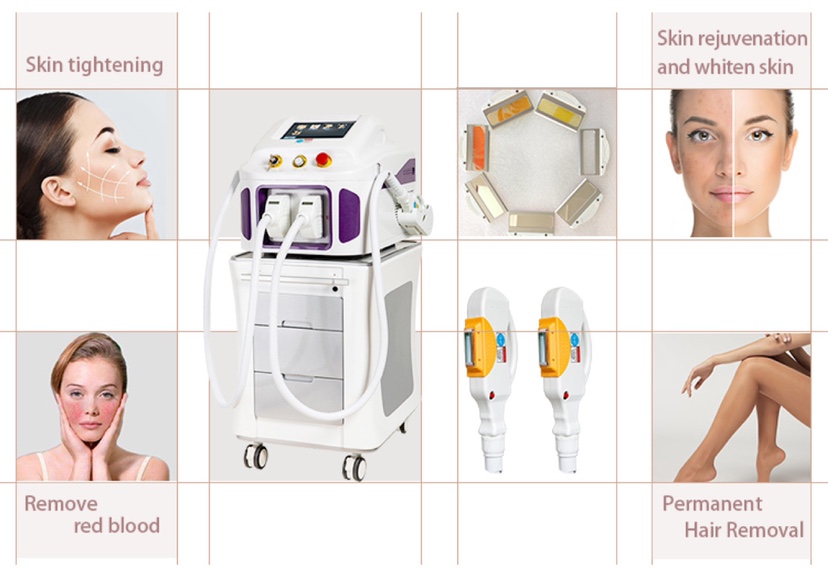
Infrared lasers are more suitable for moderate and severe acne. The 1450 nm diode laser and 1726 nm laser directly target sebaceous glands, delivering stable thermal energy to reduce sebum production for long-term acne control. Long-pulsed Nd:YAG laser (1064 nm) features deep penetration and low epidermal damage risk, ideal for patients with dark skin tones who face high pigmentation risks, and it works well on cystic and nodular severe acne. Fractional CO₂ ablative laser vaporizes partial diseased skin tissue to eliminate stubborn acne lesions; though effective, it has longer downtime and is mostly used for acne combined with depressed scars. Intense Pulsed Light (IPL), a broad-spectrum light source, is often grouped with laser devices for aesthetic use, combining bactericidal, oil-controlling and redness-reducing functions for mild acne maintenance treatment.
Standard Clinical Treatment Procedures
A complete laser acne removal process consists of pre-treatment assessment, in-operation execution and post-treatment observation. Before treatment, dermatologists conduct a comprehensive evaluation: confirm acne grading (mild, moderate, severe), test Fitzpatrick skin type, collect medical history to exclude contraindications such as pregnancy, active herpes simplex and photosensitive drug intake. Patients must clean facial makeup and grease thoroughly; topical anesthetic cream is applied for 20 to 30 minutes to ease discomfort during operation, then wiped clean before laser irradiation.
During treatment, medical staff adjust laser wavelength, energy density and pulse width based on lesion conditions. The patient wears protective goggles to block laser light, and the laser head scans evenly over acne areas, avoiding prolonged irradiation on a single spot to prevent overheating burns. For mixed-type acne, combined laser protocols are adopted: PDL first eliminates superficial inflammatory lesions, followed by Nd:YAG laser to act on deep sebaceous glands and cystic nodules. A single session lasts 15 to 30 minutes; generally 3 to 6 treatment sessions are required at 2 to 4-week intervals to achieve stable curative effects.
Post-Treatment Nursing and Outcome Maintenance
Post-operative skin is sensitive with temporary redness, slight swelling and tightness, so standardized nursing determines recovery quality. Within 48 hours after treatment, patients should use mild, fragrance-free cleansers and hydrating moisturizers, avoiding exfoliating ingredients including retinoids, AHAs and BHAs, as well as heavy makeup and facial scrubs. Strict sun protection is mandatory for at least one month: broad-spectrum sunscreen with SPF 50+ must be applied daily, and long-time outdoor exposure should be avoided to prevent post-inflammatory hyperpigmentation. Scabs formed after treatment need to shed naturally; squeezing or picking scabs will cause secondary infection and scarring.
Lifestyle cooperation is also essential for long-term acne control: limit high-sugar, high-fat and dairy food intake, maintain regular sleep schedules and avoid excessive mental stress. Doctors may prescribe mild anti-inflammatory topical ointments to accelerate skin repair; follow-up visits are arranged to adjust treatment plans according to skin recovery status. Most patients see obvious reduction of inflammatory acne after 2 to 3 sessions, with sebum secretion gradually normalized and recurrence rate significantly lowered.
Potential Side Effects and Safety Precautions
Laser acne removal is generally safe under professional operation, yet improper parameter setting or poor post-care may trigger adverse reactions. Temporary side effects include transient erythema, edema and dry peeling, which usually subside within 3 to 7 days with proper care. Severe complications such as blisters, epidermal burns and pigment abnormalities mainly occur from excessive laser energy or inadequate sun protection; dark-skinned patients have a higher risk of hypopigmentation or hyperpigmentation, requiring lower energy settings and longer recovery cycles.
To ensure safety, laser treatment must be carried out in formal medical institutions by licensed dermatologists rather than non-medical beauty salons. Contraindication screening cannot be omitted; patients with autoimmune diseases, open skin wounds and recent sunburn are prohibited from laser therapy. Operators should master laser equipment parameters strictly, conduct spot tests on small skin areas before full-face treatment, and stop irradiation immediately once abnormal burning pain appears.
Conclusion
Laser cosmetic devices realize targeted, efficient acne removal based on selective photothermolysis, overcoming the limitations of traditional systemic medication and becoming a mainstream minimally invasive treatment for acne. Different lasers have unique indications: visible light lasers fit mild inflammatory acne, while mid-infrared lasers apply to moderate and severe acne with excessive sebum secretion. Standardized pre-treatment assessment, precise intraoperative operation and scientific post-nursing are three pillars to guarantee curative effects and reduce complication risks.
With continuous innovation of laser technology, multi-wavelength combined laser therapy and intelligent energy-adjusting devices will further improve treatment accuracy and comfort. Nevertheless, laser therapy cannot completely replace lifestyle management; combined medical intervention and daily skin care can maximize clear skin effects and lower acne recurrence rate. For clinical practice, personalized laser schemes tailored to acne severity, skin type and physical condition remain the core principle of professional acne laser treatment.